
















In a significant leap toward network modernization and energy efficiency, Turkcell, (NYSE: TKC) (BIST: TCELL) Türkiye’s leading technology company and mobile operator, has successfully completed a large-scale Internet Gateway (IGW) transformation. In collaboration with HPE Juniper Networking, Turkcell evolved from traditional high-capacity router platforms to a new generation of scalable, power-efficient, and resilient platforms, setting a new benchmark in carrier-grade infrastructure evolution.
The challenge: Modernization and Scalable Growth
Turkcell’s Internet Gateway (IGW) infrastructure, built on Juniper and Cisco platforms, has reliably supported growing traffic. However, evolving network demands and service expectations have exposed critical challenges in the current architecture, particularly in areas such as:
- Power efficiency for sustainability
- Rack space optimization for better data center utilization
- Scalability to handle increasing traffic and service diversity
- Operational resilience via modular, fault-isolated designs
- Network segmentation to separate traffic types and service layers
With the rise of 400G connectivity and coherent optics, Turkcell aims to build a next-generation architecture that supports current needs and future innovation.
The solution: Juniper PTX and ACX—modern, scalable, and efficient
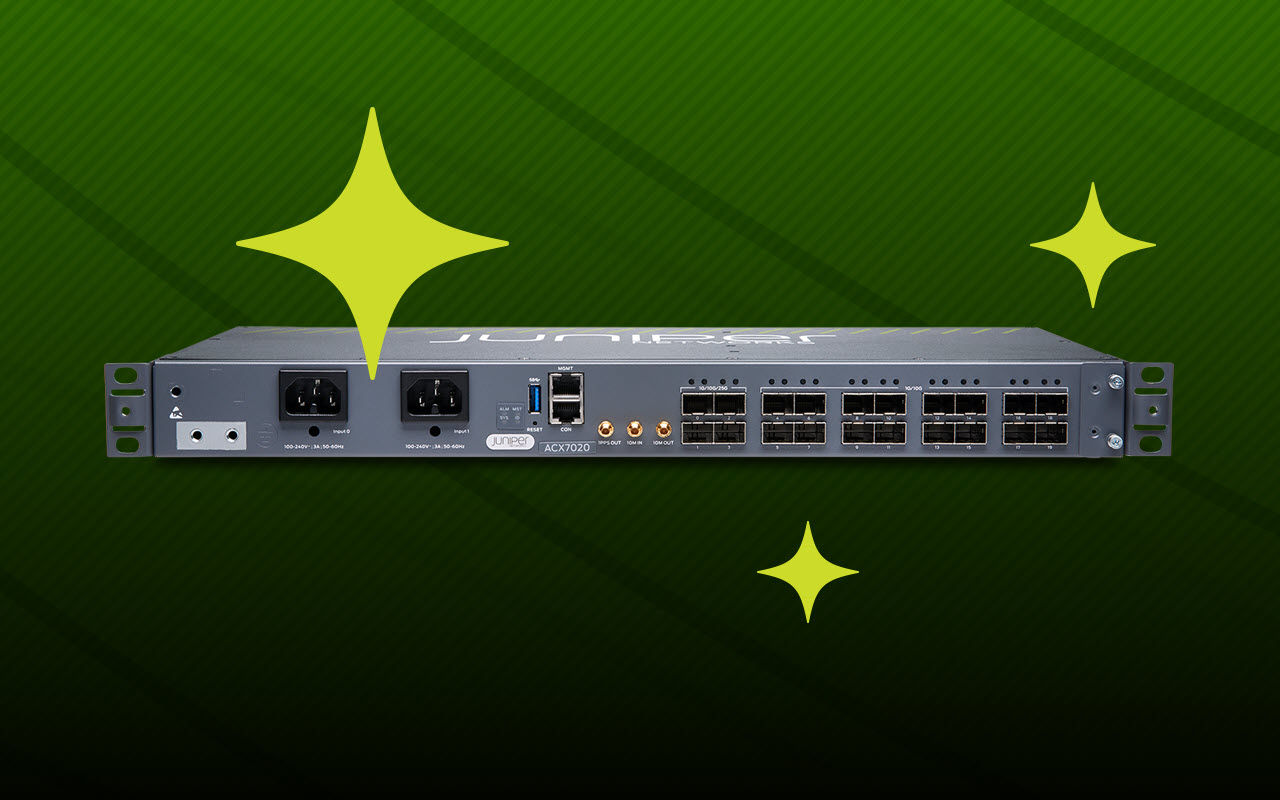
To meet these demands, Turkcell turned to HPE Juniper Networking’s PTX and ACX Series platforms, purpose-built for high-performance service provider networks.
By introducing Juniper PTX and ACX, Turkcell implemented a modern scale-up architecture that delivered:
- Hardware footprint reduced by over 97%, using 33× less rack space
- Power efficiency improved by over 88%, consuming 8× less energy
- A more resilient design, minimizing fault domains by using smaller, modular platforms
- Future-ready capabilities, including support for 400G connectivity and coherent optical technologies
Furthermore, the unified OS across these platforms—Junos® OS Evolved—significantly simplifies operations by minimizing the training curve and easing troubleshooting. The new architecture also supports advanced streaming telemetry, enabling real-time visibility, proactive fault detection, and intelligent automation.
Turkcell also benefits from high-density 100G/400G ports, which reduce the number of physical links required and save on optics, cabling, and cross-connect infrastructure.
The reduced rack footprint not only freed up space for future growth but also allowed the new platforms to be consolidated into specific high-efficiency cooling zones, contributing to improved Power Usage Effectiveness (PUE) in Turkcell’s data centers.
Built for resilience and scalable growth
Migrating from centralized, chassis-based systems to smaller, high-capacity platforms improved efficiency and enhanced network resilience.
- Failure Domain Isolation: With the move from centralized systems to multiple smaller PTX and ACX devices, the impact of any single failure is now contained, improving service availability and fault isolation
- The reduced physical footprint also frees up space that can be repurposed for other services or tenants
Finally, Turkcell’s new design follows a modular growth strategy. Rather than relying on disruptive upgrades, Turkcell can scale capacity incrementally by adding new platforms as needed, avoiding large-scale forklift replacements and enabling agile, demand-driven expansion.
The outcome: resilience, readiness, and sustainability
The result is not just a hardware refresh—it’s a complete transformation of Turkcell’s IGW architecture. The new Juniper PTX- and ACX-based design empowers Turkcell to:
- Rapidly scale services for high-growth applications
- Enhance network resilience with a more distributed architecture
- Significantly reduce operational costs through power and space optimization
- Leverage advanced observability and telemetry
- Enable the adoption of high-bandwidth technologies with a platform built for the next decade
A new benchmark in IGW modernization
Turkcell’s IGW migration is a shining example of how forward-looking architecture, paired with best-in-class platforms like HPE Juniper Networking PTX and ACX, can revolutionize both performance and efficiency. This transformation reaffirms that sustainability, scalability, operational simplicity, and service excellence should not be trade-offs—they need to be built-in by design.