















Fixed Wireless Access (FWA), fiber, and 5G are booming, but legacy edge architectures still treat fixed and mobile broadband as separate worlds, resulting in:
- Separate hardware silos, each with its own life cycle and spares
- Duplicated operations, administration, and maintenance/business support system (OAM/BSS) stacks
- Inefficient, latency-adding trombone effect of traffic transported back to a centralized mobile core
Elisa, Finland’s market leader in telecommunications, wanted to experiment and evaluate whether something more effective might be available from Juniper’s current product offerings: a single high-performance user plane edge that could natively handle fixed and mobile traffic, shrink its footprint, slash time to revenue, and reduce total cost of ownership (TCO).
Breakthrough: BNG and UPF on one router
Elisa completed the world’s first pilot in live network with a combined Broadband Network Gateway (BNG) and 3GPP User Plane Function (UPF) on a single MX Series Router. A pair of Juniper MX480 routers and MPC7 line cards were used as the platform in the pilot.
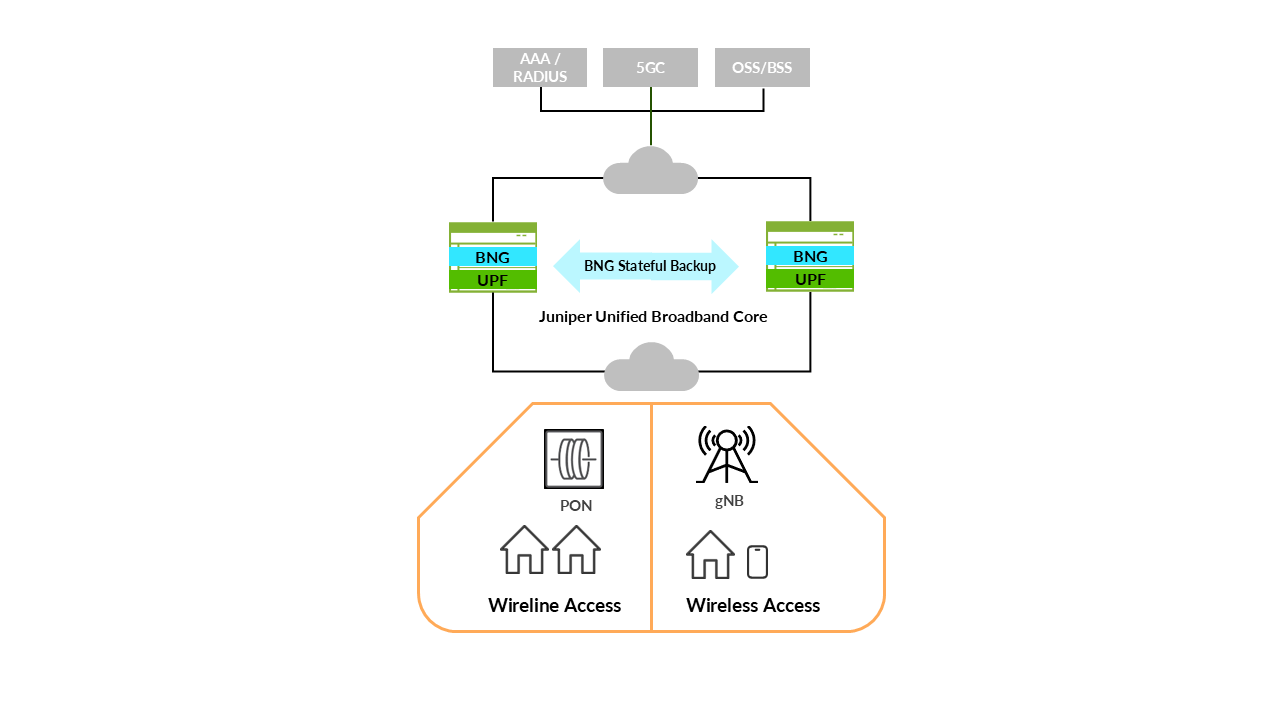 This is a huge step in the world of networking, not just because this achievement now sets a template for the industry, but because it also enables:
- True service convergence: Fixed (PPPoE/IPoE) and mobile (4G, 5G NSA/SA) subscribers terminate on the same box, share the same policies, and ride the same data plane
- Mobile core offloading: UPF at the edge processes user traffic locally and only controls traffic rides back to the core, which cuts latency and core bandwidth
- Leaner TCO: One chassis means less rack space and less power, plus shared OAM/BSS tools
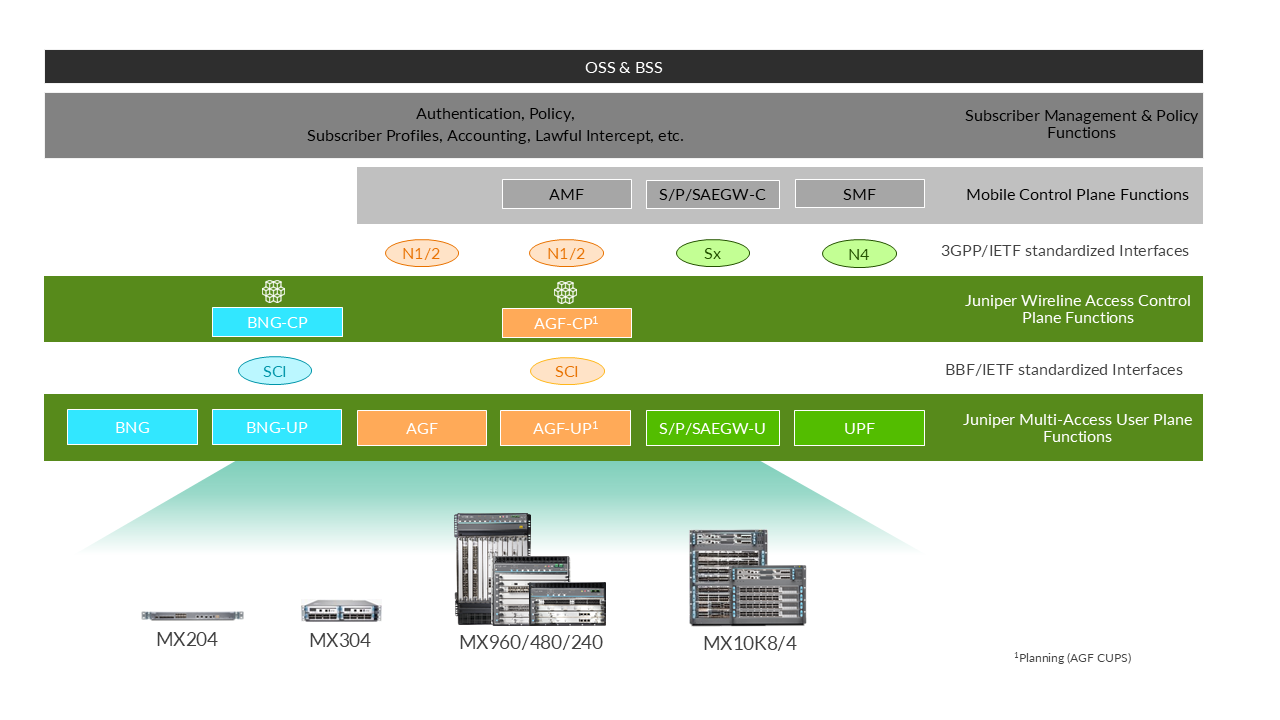
- Future-ready architecture: The same Trio-powered platform can host BNG CUPS, Access Gateway Function (AGF), and UPF simultaneously, providing an on-ramp to full wireless/wireline convergence
Key technical highlights
- 3GPP standards-based N4/Sx interface between SMF/PGW-C/SGW-C and the MX UPF: Allows deployment within any vendor’s 3GPP standards-compliant SMF,PGW-C,SGW-C
- 4G-, 5G NSA-, and 5G SA-supported: MX can act as SGW-U, PGW-U, SAEGW-U, and UPF
- BNG redundancy: Intra- and inter-chassis
- UPF redundancy: Intra-chassis
- Trio silicon: Delivers predictable throughput and low latency under mixed fixed/mobile loads
- Wireless-wireline convergence-ready: Optimized data plane between AGF and UPF keeps wireline traffic local
- BNG CUPS user plane: Allows migration from integrated BNG without a forklift
Business value snapshot
| Metric | Before | After convergence |
| Edge hardware | Separate BNG, separate UPF | Single MX chassis |
| Traffic path | Mobile data hairpins to core | Local breakout at edge |
| Latency (user plane) | Higher (multiple hops) | Lower (edge termination) |
| Power/space | Two footprints | One footprint |
| Time to market for new services | Months | Weeks or less (software feature turnup) |
What comes next?
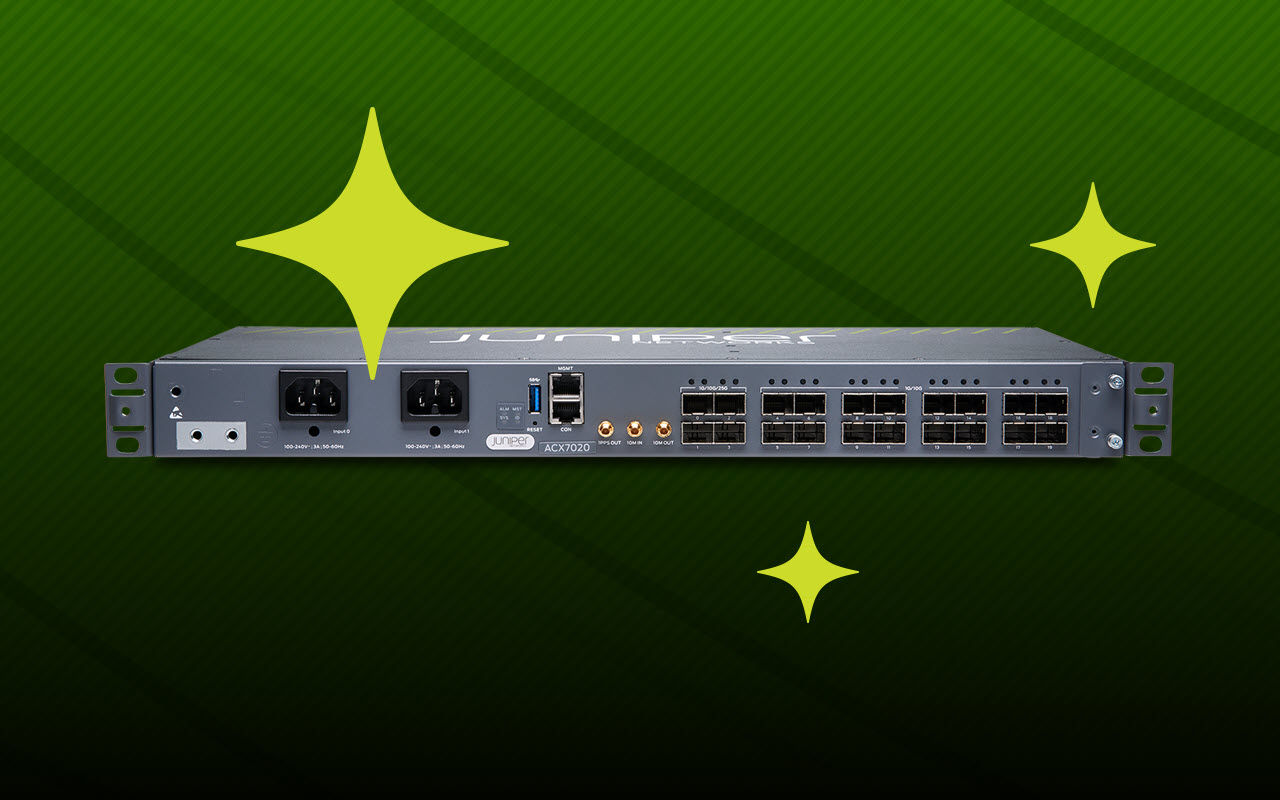
The converged blueprint currently running on MX480 is already supported on the compact, 4.8 Tbps MX304, allowing for even higher density when customers are ready to expand capacity or deploy in space-constrained central offices. Both now and into the future, Juniper’s single operating system and toolchain will keep customer operations consistent.
“This live pilot is a major step forward in making sure Elisa always has correct tools, capabilities, and technologies to stay ahead of the game in delivering converged services with greater efficiency and scalability. We’re proud to be the first to introduce this innovation to life in a live network,” said Mika Pyyppönen, Head of Telco Services, Elisa Oyj.
Learn more about Juniper’s:
MX Series Universal Routing Platforms
5G and Mobile Edge Computing solutions
About Elisa
Elisa is a pioneer in telecommunications and digital services, and its mission is a sustainable future through digitalisation. With over 140 years of experience, Elisa provides sustainable solutions for over 2.8 million consumer, corporate and public administration customers in the core markets of Finland and Estonia, as well as in over 100 countries internationally. In Finland, Elisa is the market leader in telecommunications and offers digital software services internationally. Elisa employs over 6,700 professionals in over 20 countries, and revenue in 2024 was EUR 2.2 billion.